
How to Clean Upholstery At Home A Comprehensive Guide For Everyone
Upholstery faces constant wear, from accidental spills and pet hair to daily dust and grime. Regular maintenance is key to preserving your investment and your home's cleanliness. Learning how to clean upholstery at home effectively can save you money and keep your furniture looking its best between professional services. This detailed guide will walk you through the entire process, offering the best upholstery cleaning tips and helping you select the best upholstery cleaner for the job. We’ll also help you recognize when a DIY approach is sufficient and when it’s wiser to call the best upholstery cleaner near me.
What To Know About Upholstery Cleaning?
Before you start cleaning, you must identify your fabric type. This is the most important of all best upholstery cleaning tips. Check the manufacturer’s tag for a cleaning code:
- W: Use water-based cleaners.
- S: Use solvent-based (dry-cleaning) cleaners only.
- WS: Either water or solvent is safe.
- X: Vacuum only, do not use liquid cleaners
Attempting to clean upholstery without this knowledge can lead to permanent damage, making professional rescue by the best upholstery cleaner near me your only option.
Pre-Cleaning Preparation: Setting the Stage for Success
Use an upholstery attachment to remove all loose dirt, dust, and debris from the surface, seams, and crevices. This prevents dirt from turning into mud during cleaning. Having the right tools is half the battle in learning how to clean upholstery. You’ll need a brush, white cloths, a spray bottle, and your chosen best upholstery cleaner. Always apply your cleaner to a hidden area first. This confirms colorfastness and prevents a small issue from becoming a disaster requiring the best upholstery cleaner to fix.
How to Clean Upholstery Step-by-Step
Step 1: Treat Stains Immediately
Blot (never rub) fresh spills with a clean, white cloth. For specific stains, use a targeted pre-treatment:
- Biological Stains (blood, wine): Use a cool, damp cloth.
- Greasy Stains: A mild dish soap solution can work.
- General Stains: Apply a small amount of your best upholstery cleaner.
Step 2: Clean the Entire Fabric Surface
Mix a gentle cleaning solution. For “W” codes, a few drops of clear dish soap in a bowl of warm water is often the best upholstery cleaner you can make. Using a soft-bristled brush or cloth, work the solution into the fabric in sections using circular motions. Avoid over-saturation—this is a crucial best upholstery cleaning tip.
Step 3: Rinse and Extract
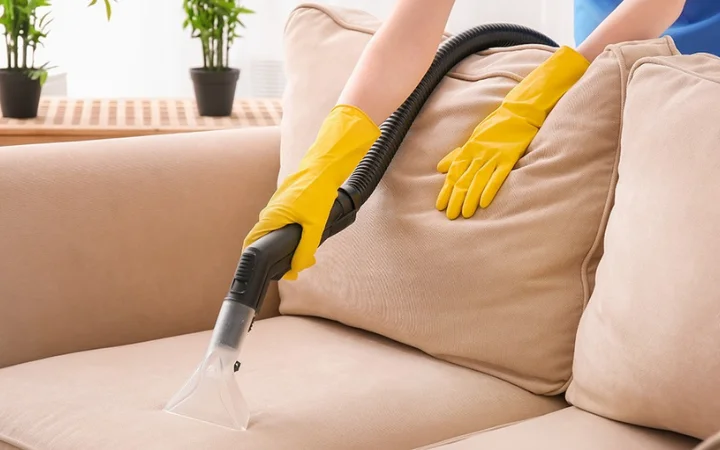
Residue attracts dirt. Dampen a cloth with clean water and gently blot the cleaned area to rinse. For deeper cleaning, a handheld extractor or wet-dry vacuum can suction out moisture and dirt, mimicking professional disinfection services equipment on a smaller scale.
Step 4: The Final Step
Open windows, use fans, or a dehumidifier to speed drying. This prevents mildew and water marks. Do not use the furniture until it is completely dry.
Selecting the Best Upholstery Cleaner for Your Needs
The best upholstery cleaner depends on your fabric and the stain. For most DIY jobs, a simple, pH-neutral soap is safest. For tougher jobs, commercial upholstery shampoos or foam cleaners can be effective. However, they often cannot match the power of solutions used by the best upholstery cleaner near me.
When To Go For Professional Help
Understanding how to clean upholstery at home is empowering, but know your limits. Call a professional if you encounter:
- Valuable or Antique Furniture: The risk is too high.
- Persistent Odors or Stains: Professionals have stronger solutions.
- Large-Scale Soiling: When the entire sofa needs revival.
- Delicate Fabrics (silk, velvet, etc.): They require specialized care.
A professional best upholstery cleaner near me uses truck-mounted hot water extraction, commercial-grade solutions, and techniques that not only clean but can offer sanitizing benefits similar to professional disinfection services.
Frequently Asked Questions
Q1: Can I use a steam cleaner on my upholstery?
Only on fabrics coded “W” or “WS.” Steam can irreparably damage “S” or “X” coded fabrics. When uncertain, consult with
the best upholstery cleaner near me.
Q2: What is the safest homemade best upholstery cleaner?
For light cleaning on water-safe fabrics, mix ¼ teaspoon of clear, mild dish soap with 1 cup of warm water. Always
spot test first.
Q3: Why does my fabric still look dirty after I clean it?
This usually means dirt is deeply embedded or cleaning residue was left behind. This is a common reason people
ultimately call the best upholstery cleaner near me for professional extraction.
Q4: How can I clean upholstery to help with allergies?
Regular vacuuming with a HEPA filter and periodic deep cleaning are key. For a comprehensive allergen removal, some
professional disinfection services offered by cleaners include sanitizing treatments.
Q5: Is professional cleaning worth it if I clean at home?
Absolutely. Professional equipment removes deeply embedded dirt you can’t reach, extending the fabric’s life. Think of
DIY as maintenance and professional service as essential restoration.
Let Carpet Long Island Provide the Final Touch
You now know how to clean upholstery at home and have the best upholstery cleaning tips to maintain your furniture daily. For the deep, restorative clean that truly revitalizes your upholstery and contributes to a healthier home environment, professional expertise is unmatched.
When you’re ready for that level of clean, Contact Carpet Long Island. We are proud to be recognized as the best upholstery cleaner near me, combining advanced cleaning technology with expert care to bring your furniture back to life.